


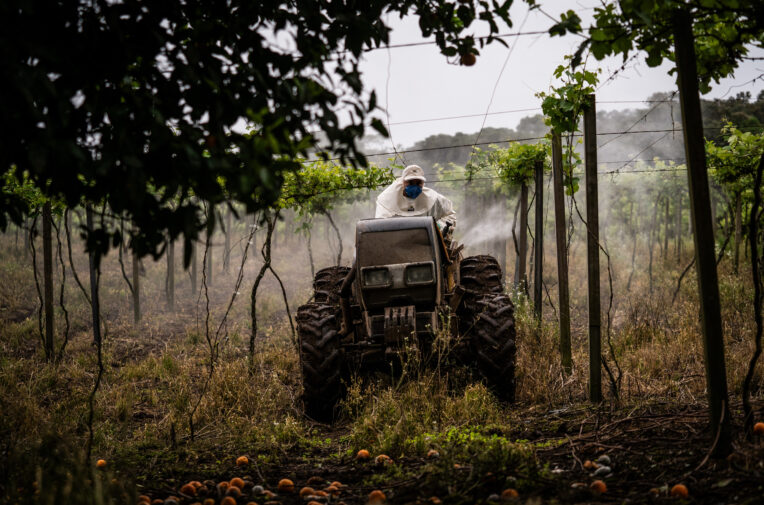
A farmer sprays pesticides in an orchard in Rio Grande do Sul, southern Brazil. Photos by Marcelo Curia for Unearthed and Public Eye
European and British pesticides named in 1,600 poisoning cases in Brazil last year
Brazilian farmworkers have described sickness, chemical burns and fatal poisonings from products made in Europe and the UK
European and British pesticides named in 1,600 poisoning cases in Brazil last year
Brazilian farmworkers have described sickness, chemical burns and fatal poisonings from products made in Europe and the UK
A farmer sprays pesticides in an orchard in Rio Grande do Sul, southern Brazil. Photos by Marcelo Curia for Unearthed and Public Eye
Brazilian health services recorded at least 1,600 suspected or confirmed pesticide poisonings last year involving products from European or British manufacturers, an Unearthed and Public Eye investigation has found.
Those reports included 32 cases where people died of the poisoning, and 47 cases involving children under the age of six.
Farmworkers in Brazil told Unearthed and Public Eye they had experienced symptoms including vomiting, breathing difficulties and severe burns from exposure to pesticides marketed by European multinationals.
In around a third of the cases involving products from European companies, the products were banned from use on farms in the EU. “These corporations are politically active and lobby to ensure the use of these pesticides is maintained in the Global South and here in Brazil,” said Nilto Tatto, a congressman in the Brazilian chamber of deputies.
The Workers Party politician added: “[These] things that are dirty and harmful are produced in the countries of the North, but intended for use in the countries of the South. It can only be described as absurd, a kind of neo-colonialism.”
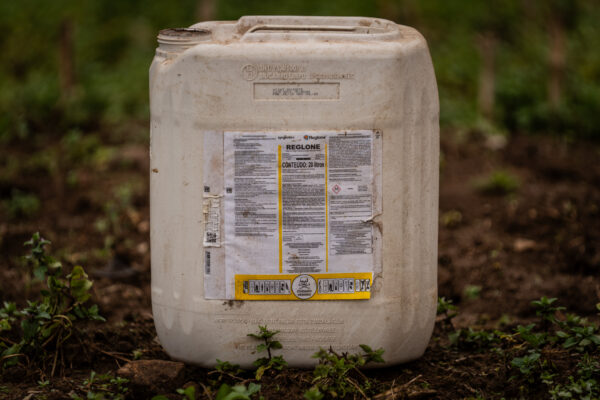
Ivan Castoldi, the son of a small-scale farmer from the Brazilian state of Rio Grande do Sul, told Unearthed and Public Eye that his father died last year after accidentally ingesting a weedkiller called Reglone. Reglone is banned in the UK, but is still manufactured in Huddersfield, West Yorkshire, by the pesticide giant Syngenta, for export to countries including Brazil.
“Let’s be honest – Brazil is currently a guinea pig for these multinationals,” said Castoldi. “They launch a product and then ban it abroad because they can see the results. So what do they do? They send it to Brazil.”
The first thing the pesticide attacked was his kidney. It had stopped working
Cristiane Redante, Nelson Castoldi’s daughter-in-law
Brazil is the most biodiverse country on the planet, but its enormous agribusinesses have also made it the world’s biggest market for pesticides. With that market come huge numbers of poisonings.
Unearthed and Public Eye spent months combing a Brazilian health ministry database of poisonings, to find all records in which clinicians were able to document the products involved.
This investigation found 2,857 reports from last year that included identifiable brand names of crop protection pesticides.
These reports are filed by Brazilian doctors and health professionals. Information about the products involved will typically have been provided by the patient or their family, which pesticide manufacturers argue is open to error.
However, more than half of those cases – 1,605 – involved brands sold by the major German pesticide manufacturers Bayer or BASF, or by their Swiss-headquartered competitor Syngenta.
These numbers understate the scale of pesticide exposure in Brazil. The majority of reports in the database do not have enough information to identify a brand name or a manufacturer. And according to the health ministry, significant numbers of pesticide poisonings in the South American country go unreported altogether.
Some of the products named most frequently in the poisoning reports are manufactured by Syngenta at its Huddersfield factory including the weedkiller Reglone and the insecticide Karate Zeon.
Unearthed shared data on cases it had identified in the database with Bayer, BASF and Syngenta prior to publication.
All three companies said they invested extensively in product “stewardship” activities, such as clear labelling and training large numbers of farmers in the safe use of pesticides and personal protective equipment (PPE).
A Bayer spokesperson told Unearthed the company takes pesticide poisonings seriously.
But he added that while the health ministry’s data is helpful for understanding “broad trends of exposure”, it had “limitations and warrants caution when drawing conclusions, particularly when looking at individual cases”.
The reports were not verified through follow-up investigations, he said, and typically relied on information provided by patients or their families. This was then written up by medical staff who may have “limited pesticide and agricultural knowledge”.
He indicated this meant it was impossible to verify that people had not made mistakes or been exposed to counterfeit pesticides.
Pesticide companies have a responsibility to put lives before profit, limiting access to highly hazardous pesticides to ensure that people are not put at risk in the first place
Michael Eddleston, professor of clinical toxicology
BASF said it took “all reports of incidents potentially involving our products very seriously” and it worked with authorities and experts to “ identify any measures that may help prevent similar incidents in the future”.
A Syngenta spokesperson complained that Unearthed and Public Eye had included poisoning reports in this analysis that were not classified as “confirmed poisonings” in the database.
Under Brazilian law, doctors must file a report on any suspected or confirmed case of pesticide poisoning they see, within 24 hours of first seeing the patient. A “suspected case” means anyone who has been exposed to a pesticide and presents with clinical signs and symptoms of poisoning, or whose laboratory test results may be compatible with poisoning.
This investigation is based on data from those reports.
In the health ministry’s database, each report is also given a “final classification” – most are classified as “confirmed poisoning” or “exposure only”.
However, Brazilian experts told Unearthed and Public Eye that clinicians can be reluctant to classify cases as “confirmed poisoning” because they believe they lack the clinical expertise to make the diagnosis.
“Unlike most medical conditions, the diagnosis of poisoning is rarely confirmed by laboratory tests, but is predominantly based on clinical criteria, which requires specific technical knowledge and professional experience,” said Vanda Garibotti, a public health biologist at the state of Rio Grande do Sul’s health surveillance agency. “Even when there is a willingness to report cases, the necessary technical conditions and institutional support are not always in place.
“Precarious employment conditions, combined with high staff turnover, are structural factors that make it difficult for healthcare professionals to confirm cases.”
For this reason, Unearthed and Public Eye did not restrict the investigation to reports classified as “confirmed poisoning”. A full explanation of the methodology is included at the end of this piece.
Syngenta’s spokesperson said: “Every genuine case of poisoning matters, and every family affected deserves our concern.
“That is why it is troubling that Public Eye and Unearthed have chosen to disregard the fact that almost half of the cases it attributes to Syngenta as poisonings are not classified in the underlying data as confirmed intoxications.
“Together with other inconsistencies we identified in their analysis, this raises serious concerns that the evidence is being selectively interpreted to support a predetermined conclusion.”
An accidental poisoning
On 11 October last year, Ivan Castoldi answered his phone to a panicked call from his brother: “Come down straight away – dad’s drunk pesticide.”
He left Guaporé, the town where he lives in the southern state of Rio Grande do Sul, and drove to the family’s nearby farm. “My brother came running with dad in his arms. He said to me: ‘Step on it, things are looking bad.’” Ivan rushed his father to hospital, but he died two days later.

Nelson Castoldi was 80 years old, but strong and active enough to keep working on his family’s land. On the day he accidentally swallowed Reglone, the family had taken the Syngenta herbicide to the farm to clear some weeds before planting soya.
“This pesticide comes in 20-litre containers,” explains Ivan. “So that we wouldn’t have to carry the whole container, we measured out what we needed for the spraying and poured it into a… plastic Coca-Cola bottle.”
Reglone is a dark liquid. It was a hot day, and Nelson was thirsty. He mistook the weedkiller for Coca-Cola and took a swig. He later told his son that he had spat it straight out, thinking that nothing would come of it. But he soon began to feel ill.
“The first thing the pesticide attacked was his kidney,” says Cristiane Redante, Ivan’s wife. “It had stopped working.” Nelson was transferred from the first hospital to one where he could have haemodialysis. However, the chemical then attacked his lungs. An autopsy later concluded he had died of respiratory and cardiovascular failure, caused by diquat poisoning.
The danger of people being accidentally poisoned by chemicals decanted into drink containers is notorious in the chemicals industry. It is so prevalent in farming that the United Nations’ code of conduct on pesticide management says manufacturers should provide their products in package sizes that are “appropriate for the needs of small-scale farmers” in order to “reduce risks” and discourage repackaging in “inappropriate containers”.
Ivan says Reglone was available in one-litre bottles, but at a much greater cost. He adds that farming is “really tough”, and this year the family “just about broke even” on the 20 hectares it cultivates: “Wherever you can save a little, you try to save.”
“We took the pesticide out of its packaging and put it in a litre of Coca-Cola. It was our mistake. But these are the strategies you try to save money, to get ahead, to improve things.”
A ‘major global problem’
Diquat, the active ingredient in Reglone, has been banned in the UK and the EU for six years, after experts concluded it posed a high risk to people living near fields where it is sprayed.
However, over the same period diquat usage in Brazil has increased dramatically, after the country imposed a ban on the chemical’s even more toxic cousin, paraquat.
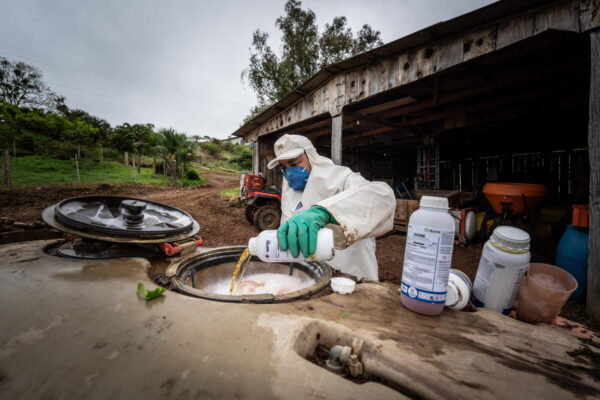
Like diquat, paraquat was a weedkiller that Syngenta manufactured for export in Huddersfield for many years after its use was banned on British soil. Brazil had been one of the main markets for Syngenta’s paraquat, where it was sold under the brand name Gramoxone. In 2020, however, Brazil imposed a full ban on paraquat, after the health ministry found that the weedkiller was causing numerous poisonings and had been linked to Parkinson’s disease. Paraquat is now banned in more than 70 countries, and Syngenta ceased its production of the chemical in mid-2026.
Since this shift, reports of diquat poisoning in Brazil have risen sharply. Between 2018 and 2022, the health ministry recorded 36 reports of diquat poisoning. Last year alone there were 75 reported cases, with Reglone specifically cited in 44 – including four deaths.
The majority of those deaths, in common with most fatal pesticide poisonings in the ministry’s database, were classified as suicides.
After 15 days, my leg was black – chunks of flesh were falling off.
Tractor driver Sidnei Souza de Oliveira, who was burned when he spilled the EU-manufactured pesticide Dormex.
Michael Eddleston, professor of clinical toxicology at the University of Edinburgh, said intentional pesticide poisoning was “a major global problem” driven by “the widespread availability of acutely toxic pesticides in rural, farming areas”.
This easy access, he said, puts “farmers, their families, and their wider community at risk during moments of crisis”.
“These pesticides are inherently dangerous,” he told Unearthed and Public Eye. “In many cases, there is no known antidote, and clinicians like me have very little we can do to save lives.”
He added: “Pesticide companies have a responsibility to put lives before profit, limiting access to highly hazardous pesticides to ensure that people are not put at risk in the first place.”
Brazil’s rapid increase in diquat use has helped turn the herbicide into one of the UK’s biggest banned pesticide exports. A previous Unearthed and Public Eye investigation found that in 2023 Syngenta exported 5,123 tonnes of diquat from the UK, more than half of which went to Brazil. The company also sources diquat from factories in China, official labels show.
A Syngenta spokesperson said: “Brazil is not bound by European pesticide decisions: it has its own robust regulatory system and its current legislation requires human-health and environmental risk assessment.”
He added: “Tropical growing conditions, crops such as soybean and sugar cane, and different pest and disease pressures create different agronomic needs.”
‘The spraying was making me sick’
Reglone is far from the only EU-banned pesticide manufactured in Europe for export to Brazil.
The BASF pesticide that was named most frequently in Brazilian poisoning reports was Dormex, a plant growth regulator used in vineyards and orchards to force buds to “break” earlier and increase fruit yields.
The active ingredient in Dormex – cyanamide – was banned from use in the EU in 2008, due to “clear indications” that it is harmful to human health, particularly that of farmworkers who spray the chemical.
Despite this, a company called AlzChem continues to manufacture thousands of tonnes of Dormex in Germany each year, for export mainly to low- and middle-income countries like Peru, India and South Africa. In Brazil, Dormex is distributed by BASF. Company documents show that BASF sources the active ingredient from AlzChem in Germany.
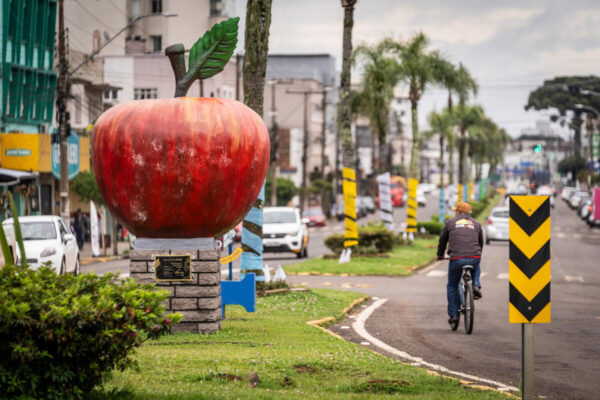
Dormex is widely used in Vacaria, a municipality in the north east of Rio Grande do Sul that is a centre for apple growing. Here, Unearthed and Public Eye spoke to current and former farmworkers who said they had experienced breathing difficulties, nausea, vomiting, rashes and other symptoms from working with Dormex.
Vanderleia da Silva Monteiro, 36, used to be one of Vacaria’s few female tractor drivers. She enjoyed her job and was proud of it. So much so that she says she still introduces herself as a tractor operator, although she now works as vice president of a local rural workers union.
“Sometimes I dream that I’m driving the tractor again; I even wake up to the sound of the tractor. But right now I don’t plan on going back, because the spraying was already making me sick,” she says.
Da Silva Monteiro’s problems began in 2021, when her employers removed the cab from her tractor, due to a technical fault. It was never replaced; from that point she had to spray pesticides without the protection of a cab.
She started experiencing symptoms when she sprayed Dormex, she says. “I’d get really swollen,” she tells Unearthed and Public Eye. “And wherever the product came in contact with my skin, it would break out in those little bumps, very close to the surface.”
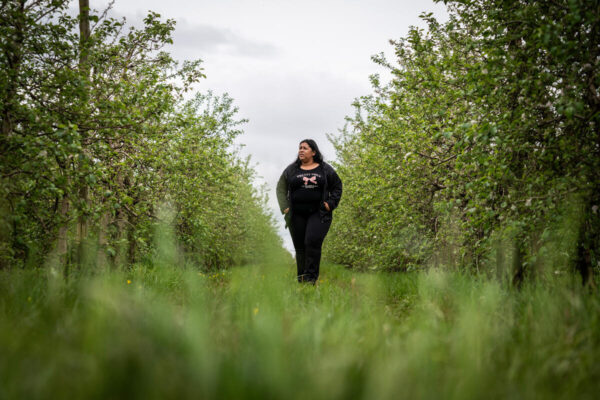
This happened, she says, every time she sprayed Dormex. She would spray in the morning. By the afternoon she would start to come out in bumps. By the evening her face would be swollen and she would feel nauseous. She would go to the hospital, be put on an IV drip, and get a doctor’s note for a day off work. “I was like that for three years – from 2021 to 2024.”
Da Silva Monteiro says she wore PPE – the mask, goggles, overalls, and other clothing that is intended to protect farmworkers from pesticides – but it was not always suitable. “The visor is the biggest hassle,” she says. “It fogs up, and then you can’t see well enough to operate the tractor. I just wore the goggles.”
Her employers only provided two sets of protective clothing each year, and these would wear thin over time, she explains. “They’d end up letting the chemical seep through. Sometimes we’d take off the protective clothing and our bodies would be completely soaked [with the pesticide].”
Da Silva Monteiro and her husband, who still works as a tractor driver in the orchards, have a 16-year-old son. “My husband wanted a second child, but I didn’t,” she says. “I was very afraid of getting pregnant while I was working in the orchard.
“What if the child is born with a problem? That’s why I don’t want any more children. Because I’m afraid.”
‘I almost died from the pain’
Like da Silva Monteiro, Sidnei Souza de Oliveira used to work as a tractor operator. Now 49, he says he started working in Vacaria’s orchards when he was 15.
But last August he was filling a sprayer with Dormex when the handle of the jug he was using broke, spilling the chemical on his leg. He says he was wearing PPE trousers, but the liquid soaked through.
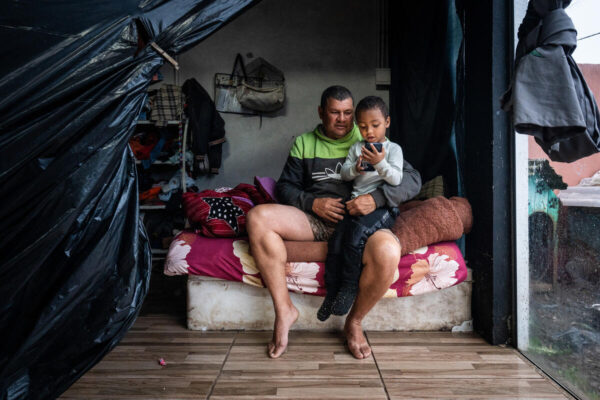
“Then the next day, when I woke up, my wife got a shock. She said, ‘Oh my gosh, look at your leg.’ It was covered in little bumps, in blisters.”
He ignored it and went back to work, but after several days he “couldn’t take it any more” and went to the hospital. The doctor asked him why he hadn’t come sooner, and said the chemical had penetrated his system. He was given medication and a 15-day sick note.
“But after 15 days, my leg was black,” he says. “Chunks of flesh were falling off. I thought it was because it had been rubbing against my clothes, but the doctor said it looked bad. He said, ‘This is getting dangerous. It’s badly burned.’”
The doctor decided to cut away the worst-affected tissue, fearing it would spread to the bone.
“I was really scared, because as he pulled, pieces of flesh came out. My leg stank; it turned black – it had rotted. It was really rotten,” Souza de Oliveira says. “I almost died that time while he was scraping it. From the pain, because he couldn’t use anesthesia.”
After 18 days he tried to go back to work, because he was worried about losing his job. “But after just two days on the job, I couldn’t stand the pain. My leg started to get stiff. It seems like I had an allergic reaction to another [pesticide] product.”
Now, his leg is healed, left with only a scar. But in December 2025 he lost his job. “They said there had been a drop in the harvest, so they’d have to let some workers go.”
Unearthed and Public Eye identified 33 reports of suspected or confirmed poisoning last year involving Dormex.
A BASF spokesperson said the company was “deeply concerned by reports of incidents involving poisoning that may be linked to crop protection products”.
He added: “We are confident in the safety of our products when they are used in accordance with the product label instructions and all applicable technical requirements and regulatory standards governing their use in respective countries.”
Made in Europe and the UK
Under Brazilian law, reports of all suspected or confirmed cases of pesticide poisoning are collected in the health ministry ‘s SINAN (Sistema de Informação de Agravos de Notificação) database, alongside other public health data like cases of infectious disease.
Unearthed and Public Eye reviewed the reports of pesticide poisoning filed to this system in 2025 to find those with clear data on the products involved. We found that of the 2,857 reports that named an identifiable brand of crop protection product, 1,605 (56%) involved brands sold by the major European pesticide companies.
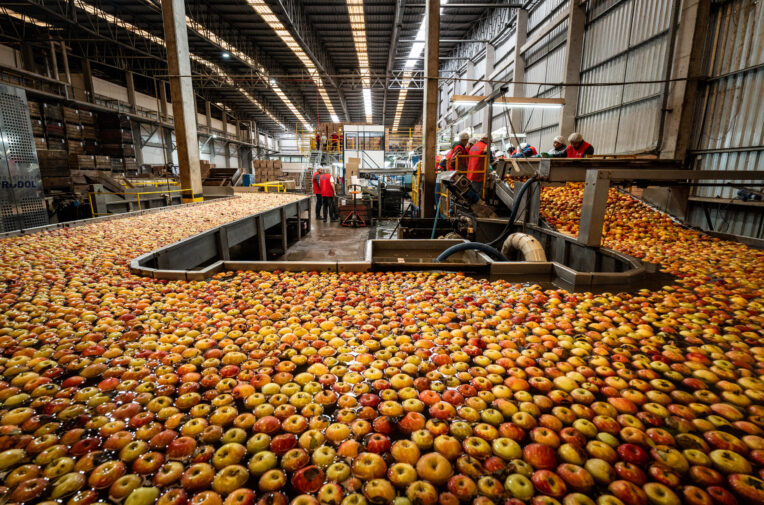
Of the companies whose brands could be identified, the German pesticide giant Bayer was by far the most frequently featured, with its products cited in 1,078 poisoning reports.
The vast majority of those cases involved Roundup, Bayer’s blockbuster glyphosate-based weedkiller. Glyphosate use is approved in the UK and EU, albeit controversial.
Around 95% of Brazil’s vast monocultures of soya have been genetically modified to be glyphosate resistant, driving huge demand for the chemical.
Unearthed and Public Eye identified at least 843 reports of pesticide poisoning that named Roundup last year. These included 12 cases where people reportedly died of the poisoning, among them a baby under the age of one.
However, a spokesperson for Bayer said that inaccuracies in the SINAN data – for example, products sometimes being wrongly classified as insecticides, or being associated with active ingredients that they do not contain – underscored “the need for caution when interpreting the cases”.
He argued that widespread familiarity with the Roundup brand meant it was commonly used as a generic term for certain kinds of pesticides.
This meant it was “unclear whether these cases might also refer to other products, generics or even counterfeit products,” he told Unearthed. “This is also indicated by around 40 different spellings of the brand in the reported [SINAN] data.”
Unearthed and Public Eye found 104 reports of poisoning that cited Bayer products that are banned or severely restricted in the EU. Many of these were insecticides containing the neonicotinoid chemical imidacloprid, which was banned from all outdoor uses in the EU in 2018, because of the danger it poses to bees.
After Bayer, Syngenta pesticides were the most commonly mentioned agricultural products in the data, cited in 425 poisoning reports. The most commonly cited Syngenta pesticide was Prime Plus, a plant growth regulator used on tobacco, followed by the UK-produced weedkiller Reglone.
The other UK-made pesticide that appears frequently in Brazilian poisoning records is Karate Zeon, a Syngenta insecticide based on the active ingredient lambda-cyhalothrin. This chemical is still permitted for use in British and European agriculture, although it is highly toxic to bees and aquatic life, and classified as toxic if swallowed by humans, and potentially fatal if inhaled.
Brazilian health authorities reported 39 suspected or confirmed poisonings involving Karate last year, including two deaths by ingestion. A further 39 cases involved Engeo Pleno, another Syngenta pesticide based on lambda-cyhalothrin, but which also contains the notorious bee-killing neonicotinoid thiamethoxam.
Syngenta manufactures lambda-cyhalothrin in Huddersfield, and as with diquat it can also source these chemicals from factories in Asia.
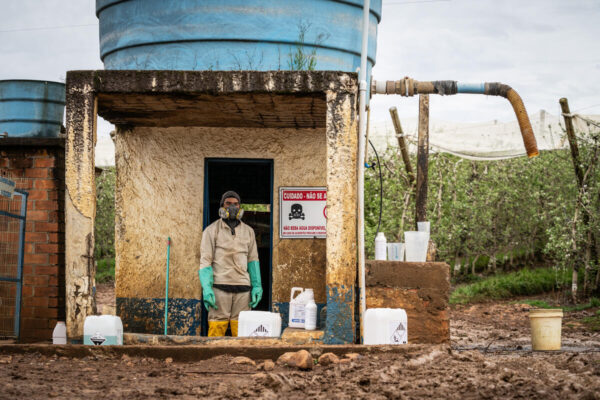
Meanwhile, Brazilian clinicians continued to report paraquat poisonings last year, half a decade after the country banned use of the weedkiller. Unearthed and Public Eye identified 40 notifications that cited Syngenta’s now-discontinued paraquat-based weedkiller Gramoxone. It is not known whether these notifications were the result of continued illegal use of Gramoxone in Brazil, counterfeiting, or another cause. Police investigations in Brazil have shown that organised crime groups are involved in smuggling banned pesticides including paraquat into the country, and selling counterfeit pesticides.
Syngenta’s spokesperson argued that the Gramoxone notifications should not be attributed to Syngenta without “independent verification” of the product involved and its supply route. “The provenance of such material would need to be established before drawing company-level conclusions; especially with the knowledge that the illegal trade of counterfeit pesticides in Brazil is a known issue,” he said.
The investigation identified 179 poisoning reports that cited products sold by BASF. In more than three quarters of those cases, the products in question are banned from agricultural use in the EU. Among those are the insecticides Regent and Blitz, both based on the bee-killing chemical fipronil, which BASF continued to export from France for years after it was banned in the EU. Another is the weedkiller Finale. This is based on the active ingredient glufosinate, which was banned by the EU in mid-2018 after it was classified as toxic for reproduction, meaning it can harm fertility or babies in the womb.
BASF referred Unearthed to its public statement on the export of products that are banned for use in the EU.
Some data analysis by Liam Rowan. Some research by Laurent Gaberell.
There are three kinds of pesticide poisonings recorded in the SINAN database: agricultural, “domestic” (for example, rat poison or ant bait intended for urban pest control), and public health (mainly insecticides used to kill mosquitos that transmit infectious disease). Across these three categories, Unearthed and Public Eye reviewed 11,559 poisoning reports for 2025.
The aim of this investigation was to analyse only the distribution of poisonings involving agricultural pesticides. These are reportedly the main driver of poisonings in Brazil, accounting for 7,614 – 66% – of the 2025 reports.
However, poisonings are often assigned to the wrong category. We therefore manually reviewed all 11,559 records to get a confirmed list of agricultural poisonings. Our approach was to accept the health ministry classification except in cases where there was clear evidence of misclassification: for example, if the poisoning was classified as “agricultural” but the named chemical was only used in domestic pest control, we reclassified it as non-agricultural; if the poisoning was classified as “domestic” but involved a product that is only licensed for use in crop protection, we classified it as agricultural. We defined agricultural as meaning only pesticides used in crop protection, not, for example, tick control in livestock sheds.
Through this process we classified 6,762 poisonings as involving agricultural pesticides.
For each poisoning report, the names of any products or active ingredients involved need to be manually recorded, and then typed into the database. This data therefore also involves errors and misspellings. To allow it to be analysed, we manually “cleaned” all of this data, adding corrected and standardised spellings of brand names and active ingredients. Every edit made in this way was checked by one or more additional reviewers. This gave us a dataset of 2,857 cases with at least one identifiable agricultural pesticide product involved.
In cases where products from more than one company were involved, we counted those cases towards the total for each company.
We used official documents – mainly the labels that have to be supplied with pesticides – to confirm the manufacturers and distributors of the products named, and the active ingredients that those products contained. We then cross-referenced these active ingredients with an EU database of chemicals that are subject to the EU’s prior informed consent regulation, to identify products that are banned from use in the EU.
The three EU-based companies named in this investigation – Bayer, Syngenta, and BASF – were each provided with spreadsheets including the data for all the poisoning reports in which we identified a product that we attributed to them. These sheets included both the original spellings from the database, and the standardised spellings which we used for analysis, to allow the companies to check for any errors. Through this process, Syngenta identified one error, which we corrected prior to publication.
A Syngenta spokesperson told Unearthed that correcting an individual error that the company “happens to find” does not validate the methodology used in this investigation, and the “more important issue is the quality-control process applied” across the entire data analysis.