


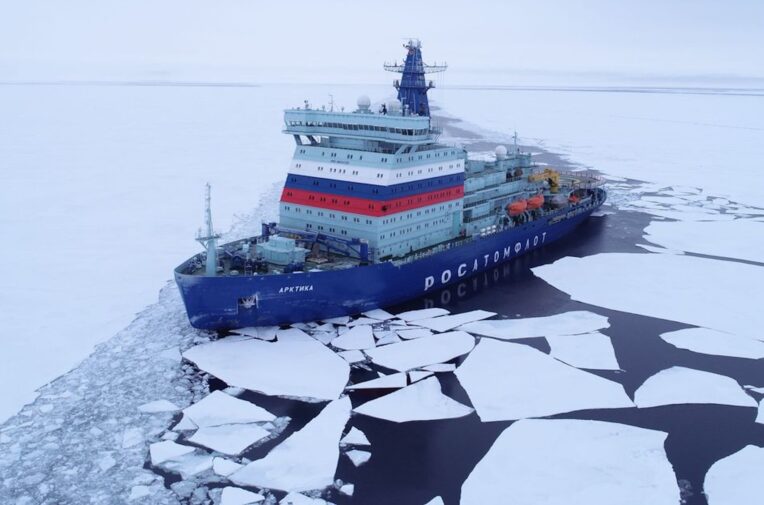
Atomflot's nuclear-powered Arktika icebreaker escorted two Seapeak-operated shipments in January 2026. Photo: Atomflot
Sanctioned Russian icebreakers helped Glasgow shipping company bring gas to Europe
All 10 of Seapeak’s shipments from the Russian Arctic in January relied on icebreakers operated by Atomflot, which is under international sanctions
Sanctioned Russian icebreakers helped Glasgow shipping company bring gas to Europe
All 10 of Seapeak’s shipments from the Russian Arctic in January relied on icebreakers operated by Atomflot, which is under international sanctions
Atomflot's nuclear-powered Arktika icebreaker escorted two Seapeak-operated shipments in January 2026. Photo: Atomflot
A Glasgow-based shipping company has relied on the assistance of sanctioned Russian icebreakers to transport over 700,000 tonnes of gas from the Arctic to Europe in the last month alone, an Unearthed investigation has found.
Seapeak operates six ‘ice-class’ tankers, capable of transporting huge cargoes of liquefied natural gas (LNG) through frozen waters.
These vessels, which the company operates from its global LNG operations hub in Glasgow, are a major part of the fleet that brings gas to Europe from Yamal LNG, a giant plant in Russia’s Arctic circle.
But during the winter months, even ice-class tankers require assistance from icebreakers to navigate the frozen Siberian waters outside Yamal LNG’s port. In the journey’s first stage, tankers often sail in direct convoy with nuclear-powered icebreaker ships operated by Atomflot, a subsidiary of Russia’s nuclear agency that has been sanctioned by the EU and the UK.
Related story – Sanctioned nuclear icebreakers helped export gas from the Russian Arctic bought by Shell
Seapeak told BBC Scotland: “We comply with all applicable sanctions and regulations, and we do not have a contractual relationship with any third parties subject to EU sanctions.”
There is no suggestion that Seapeak has made direct payments to Atomflot, which would be a clear breach of sanctions. Instead it appears likely that Yamal LNG’s operator, Novatek, contracts Atomflot’s services.
But Seapeak has played a significant role in a trade that appears to earn millions of pounds a year for Atomflot: the Russian company charges an estimated £300,000 per journey for its icebreaking services, according to its parent company’s website.
Oleh Savytskyi, strategic advisor of Ukrainian campaign group Razom We Stand, said that Seapeak “remains a key enabler of Russian gas exports”.
He added: “The flow of hard currency from Novatek’s LNG exports provides financing for relentless bombings of our civilian infrastructure, our power plants and heating systems.”
“Scots are rightly disgusted that a company based here has played such a key role in keeping the Russian war economy going,” said Ross Greer, member of the Scottish parliament for the Green party. He said Unearthed’s findings about Atomflot’s role in Seapeak’s Russian gas exports should be “the last straw”.
Greer added: “Ukraine desperately needs all the help we can offer. That means cracking down on businesses who are complicit in this brutal war.”
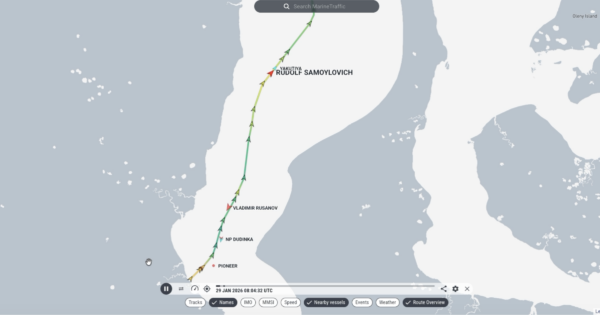
In January 2026, Seapeak-operated vessels transported ten shipments of gas from Yamal to Europe. Unearthed tracked all of them, using AIS ship-location data provided by MarineTraffic. Each ship sailed in direct convoy with an Atomflot icebreaker through a roughly 60km stretch of waters near Yamal LNG’s port, to reach the open sea. The cargoes were destined for France, Spain, the Netherlands, Belgium and Norway.
Escalating sanctions
In the four years since Russia’s invasion of Ukraine, European and British governments have imposed escalating sanctions on Russia’s fossil fuel industry. These are aimed at limiting Russian president Vladimir Putin’s ability to bankroll military action on Europe’s borders.
The UK banned imports of Russian gas in 2023. Europe, which was far more dependent on Russian energy, held off from imposing sanctions on gas imports; last year the EU was the biggest buyer of Russian LNG, importing €700m worth in December alone. The Yamal LNG plant is the source of almost all Russian LNG imported into Europe.
UK sanctions can be a real choke point for Russian LNG export logistics
– Oleh Savytskyi, Razom We Stand
In 2023, as part of a swathe of measures targeting participants in Russian energy exports, the EU sanctioned Atomflot. “Russia’s icebreaker fleet is key to the country’s Arctic hydrocarbon strategy,” the EU’s sanctions text explained, although it emphasised the role these vessels played in escorting tankers to Asia, rather than Europe.
The UK and US followed suit in May 2023, with the UK describing Atomflot as “involved in obtaining a benefit from or supporting the Government of Russia”.
But Unearthed’s research has revealed that exports of LNG to Europe from Yamal LNG rely heavily on assistance from Atomflot’s icebreakers during the coldest months of the year.
Last year Unearthed revealed that Atomflot icebreakers had escorted shipments of over 350,000 tonnes of gas bought by UK-based oil giant Shell. Shell said it was confident that it complies with all sanctions.
British and European energy companies that hold contracts for supply of gas from Yamal LNG told Unearthed that they comply with all sanctions law. Yamal LNG controls “all aspects” of the logistics of delivering that gas to European ports, the German government told MPs in response to a parliamentary question about Atomflot’s role in exports from Yamal to SEFE, a state-owned German energy company.
The EU has announced that it will ban imports of Russian LNG in all but the most urgent circumstances by the end of 2026. The UK announced last autumn that it will impose a maritime services ban that prevents British companies from providing shipping or insurance services. The ban will be introduced “in lockstep with our European partners,” a government press release said.
A UK government official told High North News last November: “the MSB [maritime services ban] means that all UK companies, including Seapeak, will be unable to continue providing these services to Russian LNG cargoes.”
“If enacted as promised last year and properly enforced, UK sanctions can be a real choke point for Russian LNG export logistics,” said Oleh Savytskyi. Razom We Stand, he added, is “pushing not just for announcements, but for tight, no-escape sanctions that actually stop Western companies from helping turn Arctic gas into missiles over Ukrainian cities.”